
About this comparison
This article was written by the SelfyzAI team. The comparison below combines Kling's public announcement of September 28, 2026, our first-batch internal testing of Kling 4.0, and the Seedance 2.5 model page on selfyz.ai. All facts were checked on October 10, 2026.
The short version: Kling 4.0 and Seedance 2.5 both perform well across entertainment and professional production scenarios — the difference is design philosophy. Kling 4.0 is designed from the professional production perspective: Native 30s Generation, Multiple Keyframes (up to 10 per generation), and Omni Reference (up to 15 multimodal references) for precise control over complex sequences. Seedance 2.5 leans into believability — native joint audio-video generation with multilingual Lip Sync, steadier motion, and stronger realism for dialogue-driven scenes. If your project lives or dies on performance, start with Seedance 2.5. If it needs intricate direction across longer sequences, plan around Kling 4.0. SelfyzAI will carry both in one model picker so you can switch per shot — Kling 4.0 was released on October 8, 2026 and joins the picker soon.
What Kling 4.0 brings
Kling AI announced Kling 4.0 on September 28, 2026, and officially released it on October 8, 2026. The announcement outlined four groups of upgrades: Dynamic Motions with high-quality stereo Sound Effects and more accurate Lip Sync at up to 4K/1080p Resolution with 10-bit HDR output; Omni Reference (up to 15 multimodal references) with more consistent results and enhanced Video Editing; Multiple Keyframes (up to 10) with Native 30s Generation; and Video Extension plus support for Multiple Languages, Accents, and Dialects.
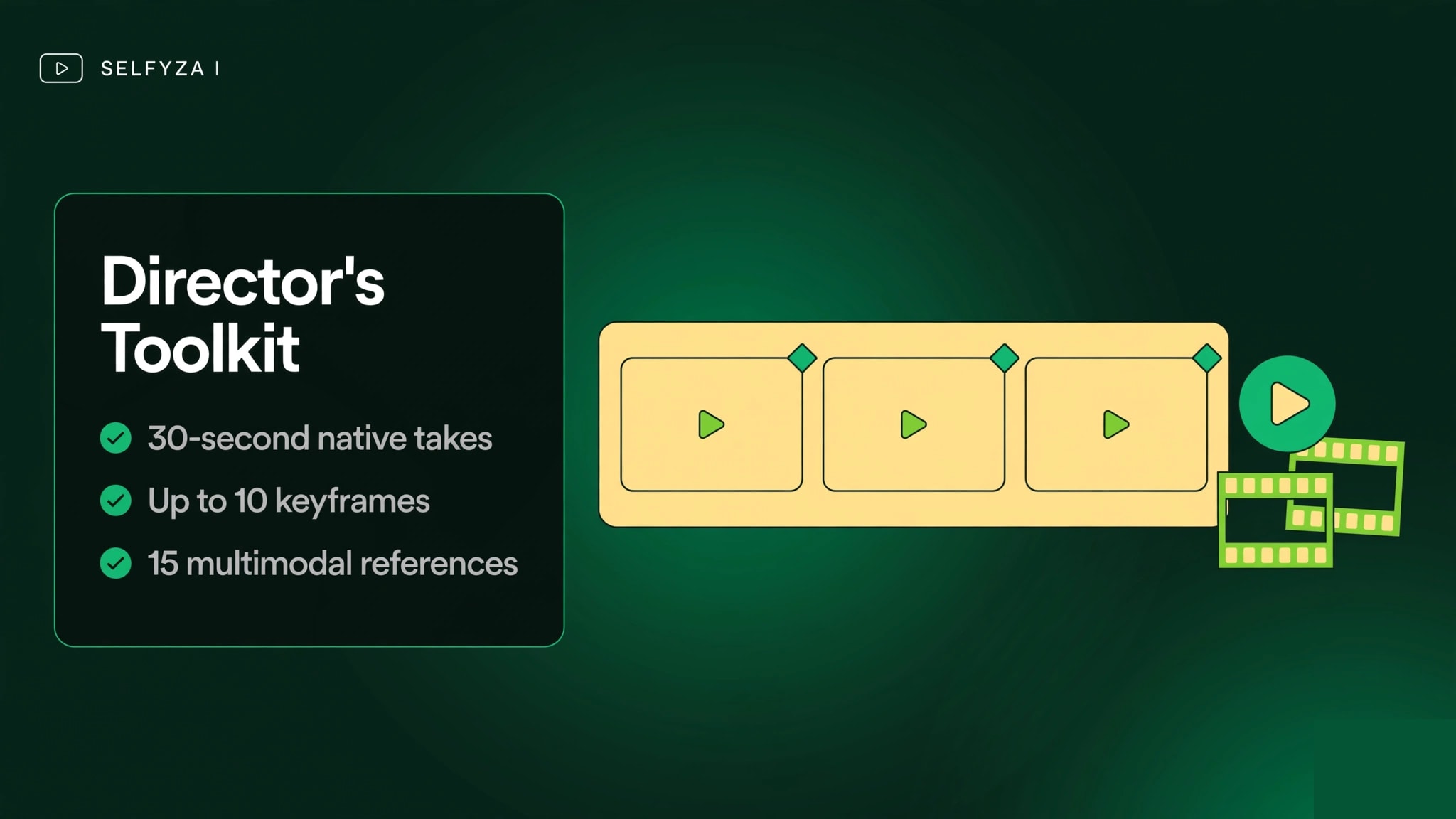
The partner preview materials add detail that matters for working creators. Ten keyframes mean you can anchor the opening frame, the turning points, and the closing frame of a shot in advance, moving generation from a single frozen moment toward full-sequence control. Fifteen reference inputs can combine images, video clips, voice timbre, and subjects, which is aimed at keeping characters, products, and styles stable across cuts. A single 30-second native generation lets one continuous take carry a complete story beat, reducing the visible seams that come from stitching shorter clips. Video Editing and Video Extension features point at revising existing footage — local fixes, style adjustments, and extending a narrative — rather than re-rendering from scratch.
SelfyzAI was invited to test Kling 4.0 in the first internal batch, and our early runs line up with the announcement: the differences that show up first are longer coherent takes, steadier motion in high-action shots such as running and chase scenes, and reference material holding its identity across cuts. We are continuing to validate the new capabilities against our own production scenarios ahead of the picker launch, and the model will be added to the video workspace picker soon. The video below are generated with Kling 4.0 by SelfyZ AI team:
Our Kling 4.0 review lays out the full beta findings behind these expectations.
What Seedance 2.5 brings
Seedance 2.5 takes the opposite approach to quality: instead of generating silent video and adding sound later, it creates picture and audio together in one pass. Dialogue, ambient sound, and movement are designed to belong together, with lip movements aligned across multiple languages. For anyone making dialogue-driven shorts, character skits, or story series, that single design decision removes an entire post-production step.
The rest of the model's profile follows the same performance-first logic. Motion stays more stable from frame to frame and the picture carries a stronger sense of realism, so footage holds up beyond the phone feed. You direct the scene through prompts and reference material — the dolly-in, the golden-hour glow, the actor's hesitation — covering character performance, lighting, shadows, camera movement, and pacing. And character consistency is treated as a first-class feature: generate from a photo or character image and keep appearance, style, and expression stable across different shots, scenes, and creative directions.
That combination makes Seedance 2.5 a natural fit for e-commerce and live selling, where one consistent spokesperson has to deliver pitch after pitch, and for social formats where the face carries the video. Seedance 2.5 has a dedicated model page on our site and is rolling out to the workspace picker; an image-to-video workflow with a character reference is the fastest way to put its consistency to work once it lands in your picker.
Kling 4.0 vs Seedance 2.5 head-to-head
The table below compares what each model is announced or documented to do. Kling 4.0 entries reflect Kling's September 28, 2026 announcement and partner preview materials; Seedance 2.5 entries reflect its model page on selfyz.ai.
| Dimension | Kling 4.0 (preview) | Seedance 2.5 |
|---|---|---|
| Native clip length | Native 30s Generation — up to 30 seconds per generation, announced | Clip length not disclosed on the model page; workspace generations currently run 2–15 seconds |
| Shot control | Multiple Keyframes — up to 10 per generation, announced | Prompt and reference-driven direction; keyframe count not specified |
| Reference inputs | Omni Reference — up to 15 multimodal references (images, video, voice timbre, subjects), announced | Photo or character image reference for consistency |
| Audio | Sound Effects (high-quality stereo), more accurate Lip Sync, Multiple Languages, Accents, and Dialects, announced | Native joint audio-video generation with multilingual lip-sync, documented |
| Motion and realism | Dynamic Motions — stable motion in high-intensity scenes (running, fighting, chasing), announced | Steadier frame-to-frame motion with stronger realism, documented |
| Editing and continuation | Enhanced Video Editing plus Video Extension, announced | Not listed among documented capabilities |
| Character consistency | Consistency via the 15-reference system, announced | Appearance, style, and expression held across shots and scenes, documented |
| Availability | Released October 8, 2026; coming to the SelfyzAI picker soon | Model page live on selfyz.ai; rolling out to the workspace picker |
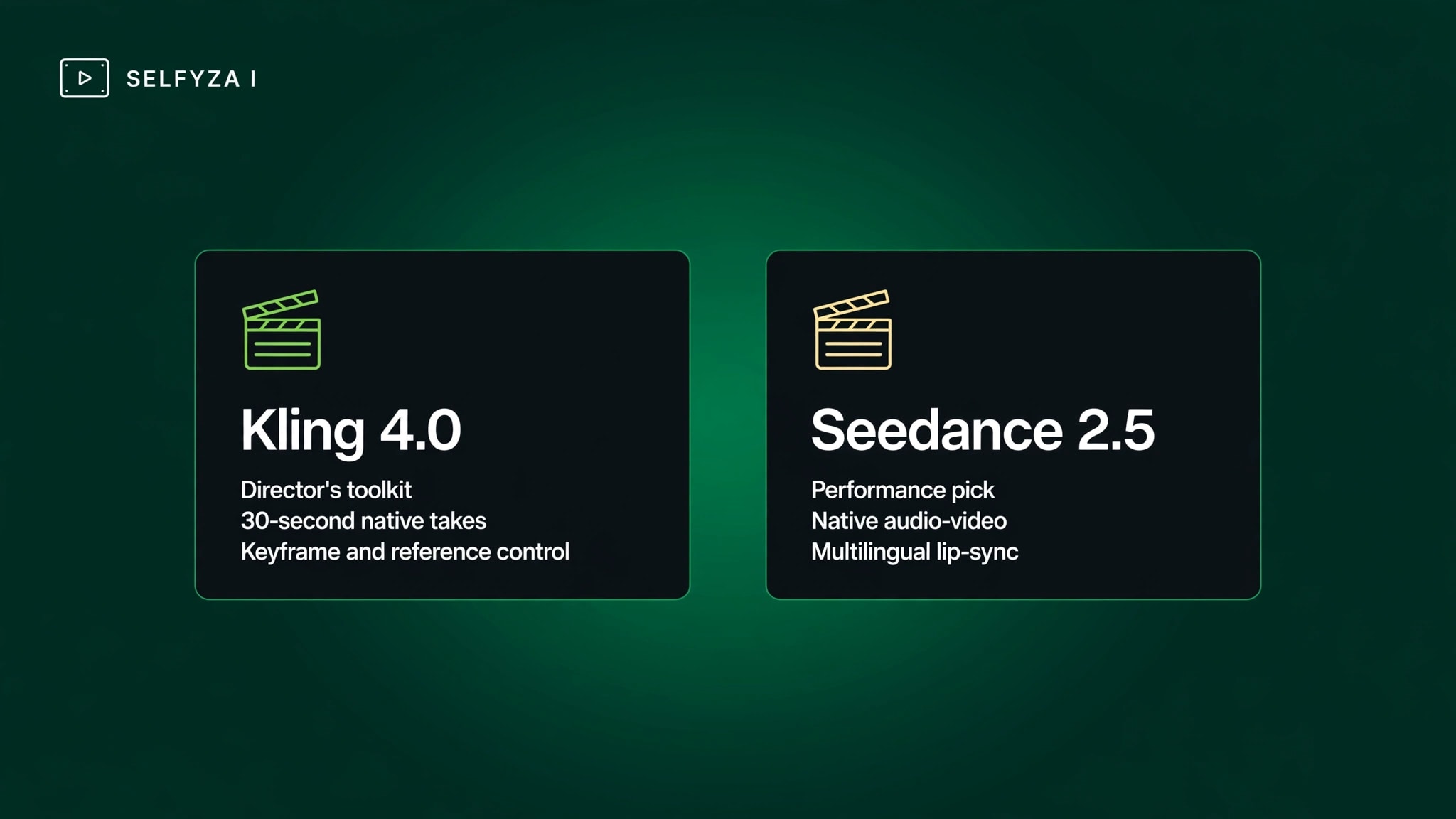
Read the table as a difference in design philosophy, not a ranking — both models perform well across entertainment and professional production scenarios. Kling 4.0's product design starts from the professional production perspective: Multiple Keyframes, Omni Reference, Native 30s Generation, and Video Editing tools are all about letting a director specify exactly what happens. Seedance 2.5 leans into believability: joint audio-video, Lip Sync, and steadier motion are all about making the result feel like it was actually filmed. A text-to-video workflow benefits from either strength depending on whether your prompt describes a performance or a camera plan.
Which one fits your project
Both models cover entertainment and professional production work well — treat the guidance below as matching strengths to shots, not as picking a winner.
Pick Seedance 2.5 when the performance carries the video
Dialogue-driven shorts, product pitches with a consistent spokesperson, character skits, and multilingual voice content all play directly to native audio-video generation and lip-sync. If your current pain is dubbing-looking dialogue or faces that drift between cuts, this is the model designed around that problem.
The video below are generated by Kling 4.0 for your reference:
Plan for Kling 4.0 when direction carries the video
Multi-shot narratives, action sequences, ads that need many product and message variants from one creative, and any project where you storyboard first all benefit from Multiple Keyframes, Omni Reference, and Native 30s Generation. If your current pain is stitching five clips into something that looks like one scene, Kling 4.0 is built for that workflow.
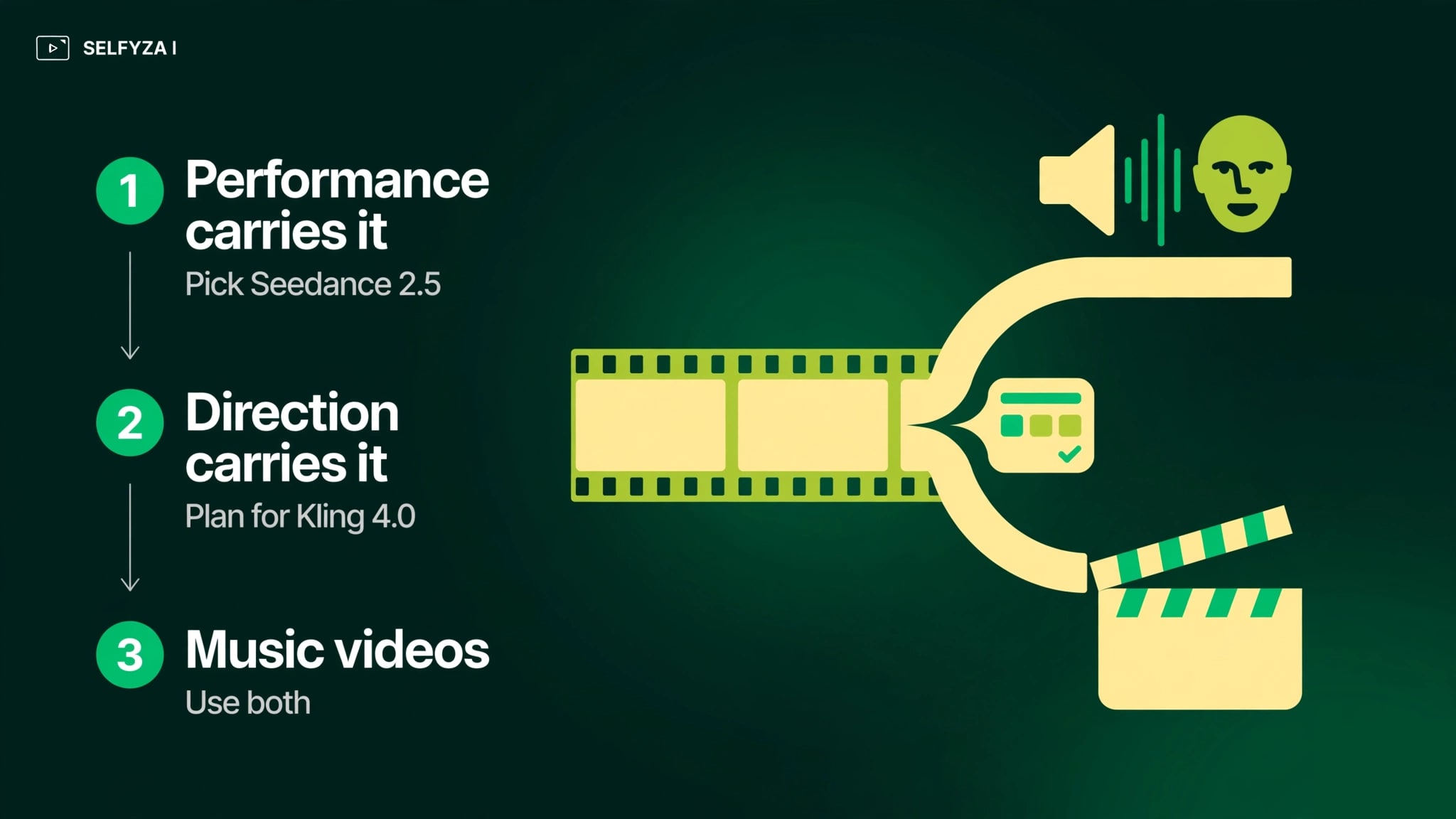
For music videos, expect to use both
A performance shot with synced lip movements is Seedance 2.5 territory; a 30-second narrative arc with controlled camera moves is Kling 4.0 territory. The SelfyzAI MV Agent already structures generation around lyrics, storylines, and per-shot rendering, which maps cleanly onto a two-model workflow. A reference-to-video workflow is worth learning now regardless of which model you start with, since both reward well-chosen reference material.
The practical advantage of a multi-model workspace is that this choice happens per shot, not per subscription. The picker already holds 13 video models, and both Kling 4.0 and Seedance 2.5 are headed there — so the comparison above becomes a setting you switch, not a platform you migrate to.
If your decision is between Kling versions rather than model families, our Kling 4.0 vs Kling 3.0 comparison covers that choice.
Real limitations
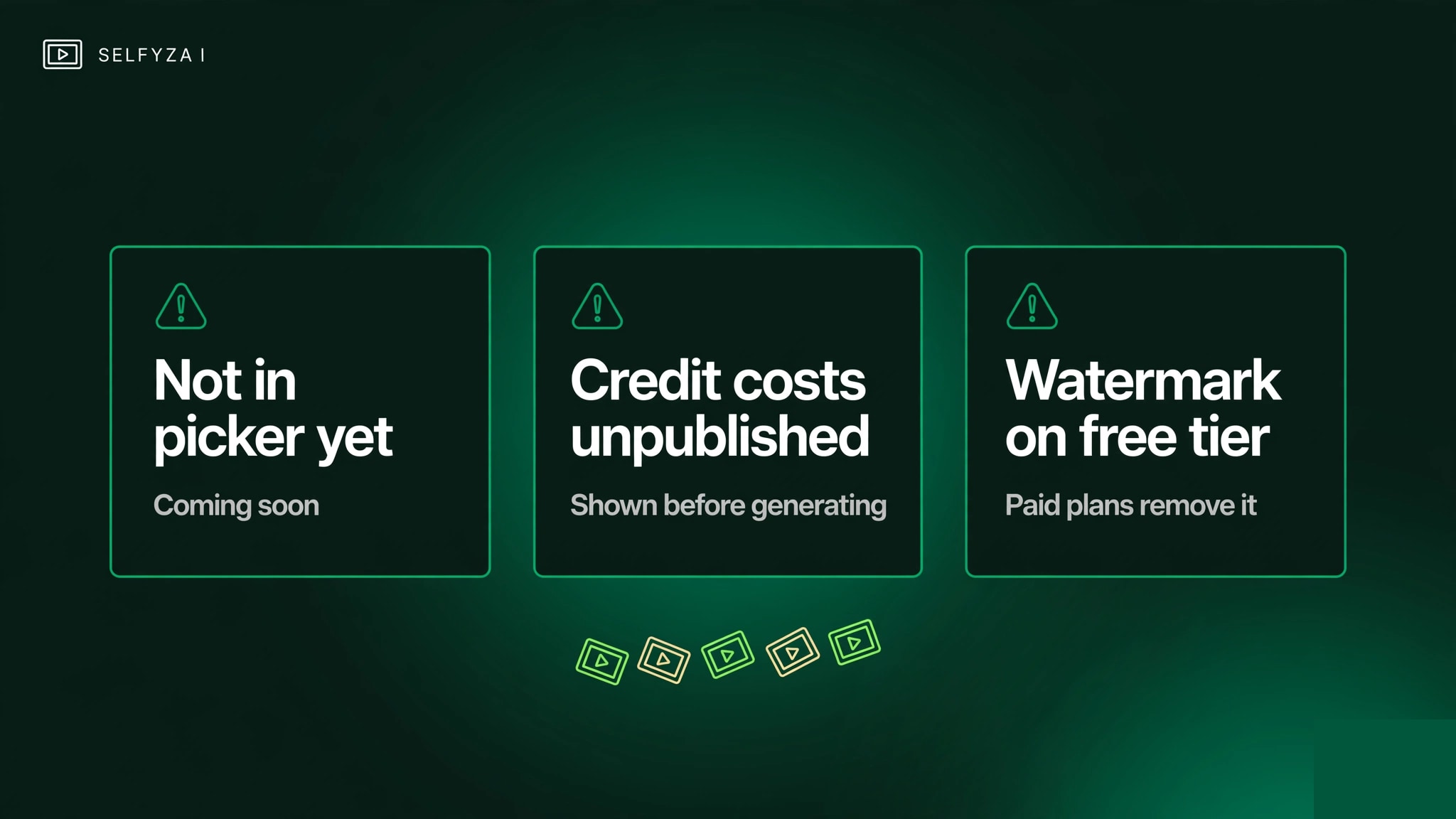
Kling 4.0 is not in our workspace picker yet
Kling 4.0 was officially released on October 8, 2026, and we will add it to the picker soon. Seedance 2.5 is rolling out to the workspace picker — the model list changes frequently, so check the picker in your workspace for what is selectable right now rather than assuming from this article. While you wait, the 13 video models already in the picker cover the same workflows: reference-driven generation you practice on Kling 3.0 today transfers directly to Kling 4.0's keyframe and reference system.
Credit costs differ per model and are not published in advance
Every generation consumes credits based on the model, the clip length, and the resolution. The workspace shows the exact cost before you generate, and every deduction is itemized in your Credit History. Plan pricing is on the SelfyzAI pricing page — as of October 2026, paid plans start at $12.99 per month; check the page for current plans.
Workspace output specs are what they are today
Web workspace video exports as MP4 or MOV, under 4K resolution, with generations running 2–15 seconds. Longer native outputs and higher-spec exports arrive with the models themselves, so treat any 30-second or 4K workflow as planned capacity, not current capacity.
Free-tier exports carry a watermark
Watermark-free downloads and the highest export resolutions require a paid plan, depending on the plan you choose. All purchases are non-refundable, so it is worth running free-tier tests on the models already in the picker before committing to a plan for a Kling 4.0 project.
Frequently asked questions
When is Kling 4.0 coming out?
It is out — Kling officially released Kling 4.0 on October 8, 2026, following the September 28 announcement. 4.0 Flash, a lighter variant, had opened to Ultra yearly subscribers on Kling's own platform at announcement time.
How will I know when Kling 4.0 arrives in the picker?
We completed first-batch internal testing of Kling 4.0, and the model will be added to the workspace picker soon. Nothing about your account or workflow needs to change in the meantime.
What is the biggest difference between Kling 4.0 and Seedance 2.5?
Design philosophy. Both models perform well across entertainment and professional production scenarios. Kling 4.0 is designed from the professional production perspective — its headline features (Native 30s Generation, Multiple Keyframes, Omni Reference, Video Editing and Video Extension) are director's tools for specifying complex sequences. Seedance 2.5 leans into believability — native joint audio-video, multilingual Lip Sync, steadier motion — making generated footage feel filmed.
Can I use both models in one project on SelfyzAI?
Yes, once both are in the picker. The workspace is designed around per-shot model switching — the picker already holds 13 video models, so mixing a Seedance 2.5 performance shot with a Kling 4.0 narrative sequence in one project will work the same way.
How many credits will a Kling 4.0 generation cost?
That has not been disclosed. Credit cost on SelfyzAI depends on the model, clip length, and resolution, and the workspace always shows the exact cost before you generate.
Verdict
Kling 4.0 vs Seedance 2.5 is not a contest with one winner — both are strong across entertainment and professional production scenarios, differing in design philosophy. If we had to compress it to one line: Seedance 2.5 makes generated people feel real, and Kling 4.0 — designed from the professional production perspective — makes generated sequences feel directed. Most serious projects will want both, applied where each is strongest.
That is exactly why the picker matters more than the podium. Our position is simple: first-batch internal testing of Kling 4.0 is done, Seedance 2.5 is rolling out, and both land in the same workspace where you already switch models per shot. If you want to be ready when Kling 4.0 lands in the picker, the useful preparation is not waiting — it is learning reference-driven generation on the models in the picker today, so your keyframes and reference packs are ready when the new model arrives. Upscale your best results with Video HD in the meantime, and check the picker for the latest model list.
We have also put Kling 4.0 next to the season's other major release in Vidu Q4 vs Kling 4.0.