
This article is written by the SelfyzAI team. In short, a Nano Banana MCP server gives an AI agent structured image tools, but the server—not the model name—determines authentication, editing state, storage, and client support. We reviewed ranking project documentation and verified current product availability as of November 13, 2026.
Want Nano Banana without local MCP setup?
Use SelfyzAI on the web or mobile to create images with current Nano Banana models while image MCP support remains a future expansion.
Searchers want a server that connects to their client, protects the key, supports iteration, and saves the result predictably. This checklist follows those tasks.
What a Nano Banana MCP Server Actually Is
A Nano Banana MCP server is an integration layer, not the image model itself or automatically an official Google product. It exposes agent tools and sends requests to a Gemini image endpoint or another documented provider.
The agent plans the action, the server validates arguments and credentials, and the provider generates or edits the image. This separation reveals who receives the prompt, bills the request, and controls the file.
“Nano Banana AI agent” usually describes this combined loop rather than a separate model. The server supplies the tools and state for generation, inspection, and another edit.
Verify the Model and Provider Before Installing
Repositories can retain an old name, model identifier, SDK, or example after the provider changes its endpoint. Verify the live path before adding a key.
In addtion to Nano Bana MCP, we also finished researches on GPT Image MCP and reviewed Best Image Generation Servers to offer more infomation about image MCP solutions.
Confirm the underlying provider
Use the source or primary documentation to determine whether the server calls Google, a model host, or a reseller. This affects billing, privacy, regions, and account access; a directory snippet cannot establish the request path.
Match the documented model identifier
Check the exact model value in current code, not only the README headline. Confirm its format and default, especially if a hard-coded value requires a server update.
Check repository health
Review commits, releases, issues, dependencies, and archive status. A stale server is riskier when providers or clients change authentication, schemas, or file handling.
Setup Checklist for Claude Code, Cursor, and Other Clients
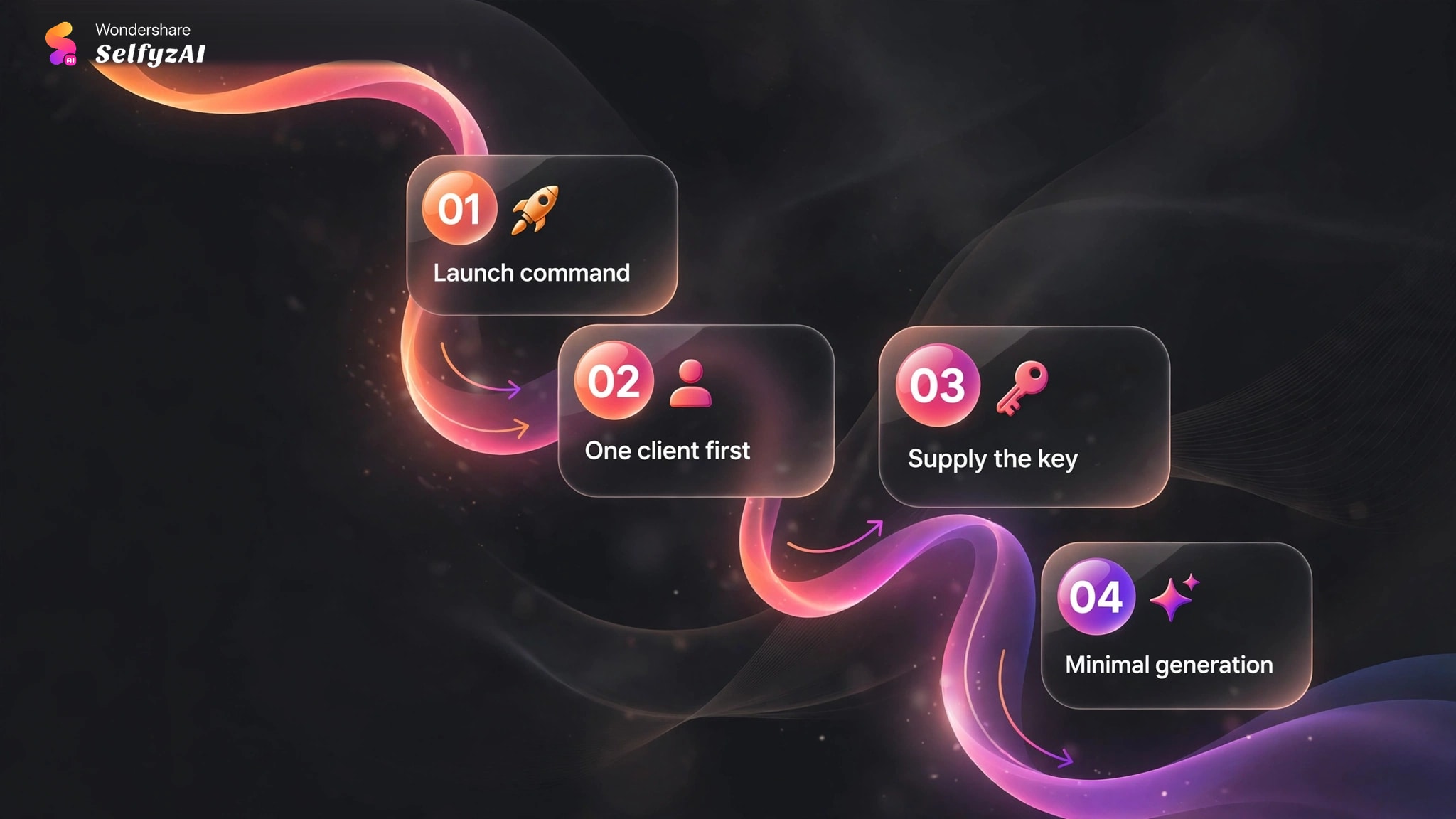
Client menus differ, but each configuration needs a launch method or URL, arguments, environment variables, and a working directory.
Resolve the launch command
Identify whether the server uses a package runner, local build, container, or hosted endpoint. Use an absolute entry-point path because clients may start from another directory.
Add the server to one client first
Confirm one client can enumerate the expected tools before copying its configuration elsewhere. A running process alone does not prove the tools loaded.
Supply the key through a controlled channel
Prefer a client-supported environment variable, restart when variables load only at launch, and keep real keys out of prompts, recordings, issues, and repositories.
Run a minimal generation
Request one image and record the tool, model identifier, prompt, server and client versions, and output path. This creates a known-good baseline.
API-Key Security and File Storage
Credentials and files are the two places where a quick demo becomes an ongoing workflow. Decide both before giving the agent broader autonomy.
| Credential method | Visibility | Portability | Main consideration |
|---|---|---|---|
| MCP client environment | Limited to configured server process | Tied to client config | Convenient when the client protects secrets |
| System environment | Available to eligible local processes | Works across several clients | Broader process exposure |
| Local config file | Read by the server from disk | Easy to back up or move | File permissions and source-control risk |
Client environment variables keep the key close to the server process. System variables aid reuse but increase exposure. Local files need restrictive permissions and source-control exclusion.
Define one output root per project, include task identifiers when jobs overlap, and test how the server handles a missing or unwritable directory.
Common Nano Banana MCP Failures
Most setup problems can be assigned to a specific boundary instead of treated as a general “MCP error.”
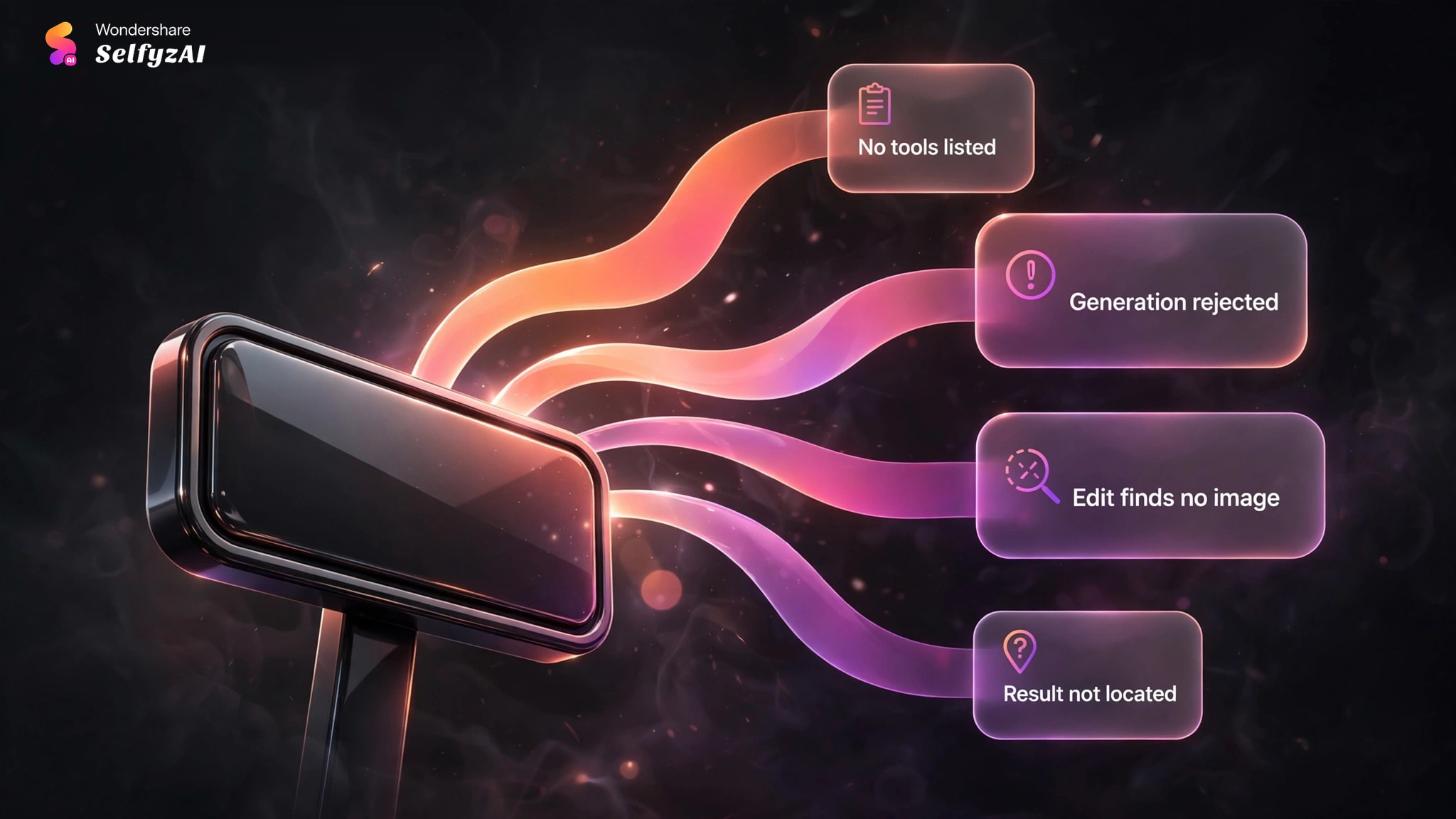
The client lists no tools
Check whether the server started, the path and runtime exist, and the client read the intended configuration. Run the entry point directly before changing model settings.
The server starts but generation is rejected
Confirm the server can read the credential and that the account can access the selected provider and model. Then verify the identifier.
Editing cannot find the image
Use an absolute path that exists and is readable from the server's environment, not only from the host or another container.
The result exists but is hard to locate
Set an explicit output folder and make the final path part of the tool result.
Continue editing changes the wrong asset
Query current-image state when available, or pass the intended file explicitly. Stateful convenience needs a clear session boundary.
Where SelfyzAI MCP Fits Today
SelfyZ currently gives creators Nano Banana access through web and mobile interfaces, while its MCP scope remains focused on AI MV generation.
As verified on November 13, 2026, current image generation includes Nano Banana model options. This is the direct route for creating images without maintaining a Gemini image MCP server.
The current agent connection supports AI MV generation, and the MV Agent remains the relevant product workflow. Image MCP support is planned for wider coverage later, with no release date stated yet.
Our rubric assigns three points to image access, two to Nano Banana access, two to web/mobile access, and three to image-MCP automation. The result is 7.5 out of 10 because image MCP is not yet available.
Our verdict
A practical Nano Banana interface today, not a Nano Banana MCP endpoint yet.
Use it for web or mobile image generation and a path into video or effects. Use another implementation when an agent must call Nano Banana tools through MCP today.
Pros
- Nano Banana access
- Web and mobile
- Image-to-video
Create a Nano Banana image, download it, then continue into video if needed.
Create Nano Banana ImagesFrequently asked questions
Is a Nano Banana MCP server an official Google product?
Not necessarily. Nano Banana refers to a Gemini image model family, while an MCP server may be created by an independent developer, platform, or internal team. Verify the repository owner, provider endpoint, and credential path.
Does Nano Banana MCP require a Gemini API key?
Many direct implementations require a provider key, but the exact credential depends on the server's backend. A hosted service may use its own account or credit system. Check the request path before installation.
Can Nano Banana MCP work with Claude Code and Cursor?
Yes, if the chosen server documents compatible MCP configuration and the client supports its transport and runtime. Configuration blocks may differ, so verify the command, arguments, environment variables, and working directory for each client.
Where are generated images saved?
That depends on the server. Common patterns include a project folder, configured output directory, temporary folder, URL, or Base64 response. Run one test and record the actual path before automating a batch.
Can Nano Banana currently run through SelfyzAI MCP?
No. Nano Banana image generation is available through the platform's web and mobile experiences. The current MCP capability supports AI MV generation, while image MCP coverage is planned for a later stage.
Conclusion
A Nano Banana MCP server is most useful when it preserves the complete iteration loop: generate, identify the current asset, edit it, continue editing, and save each result predictably. Model access alone does not solve key security, state, paths, or maintenance.
Choose an independent MCP implementation when agent-controlled image work is required today. Choose SelfyzAI when the immediate need is Nano Banana image generation on web or mobile, followed by an optional move into video or effects, while recognizing the current MV-only MCP boundary.