
What Vidu Q4 Is
Vidu Q4 is the next entry in Vidu's Q series of video models from Shengshu Technology. It is a video generation model aimed at creators who need higher image fidelity and more controllable camera work than the current generation offers.
One thing to settle first: this is a preview, not a launch announcement. Vidu Q4 has not been publicly released, and no public launch date has been announced. What makes this preview different from a spec-sheet summary: SelfyzAI is among the first batch of beta testers, so everything below about what Q4 can do comes from our hands-on testing during the beta — not from third-party claims. That framing matters, because a pre-release model is a plan, not a product you can run.
In our beta testing, Vidu Q4 covers two generation modes: single-image-to-video and reference-to-video. The reference mode accepts ten-plus reference images alongside 0–3 audio references — we state no exact cap, since the final ceiling is confirmed at release.
What Changed vs Vidu Q3
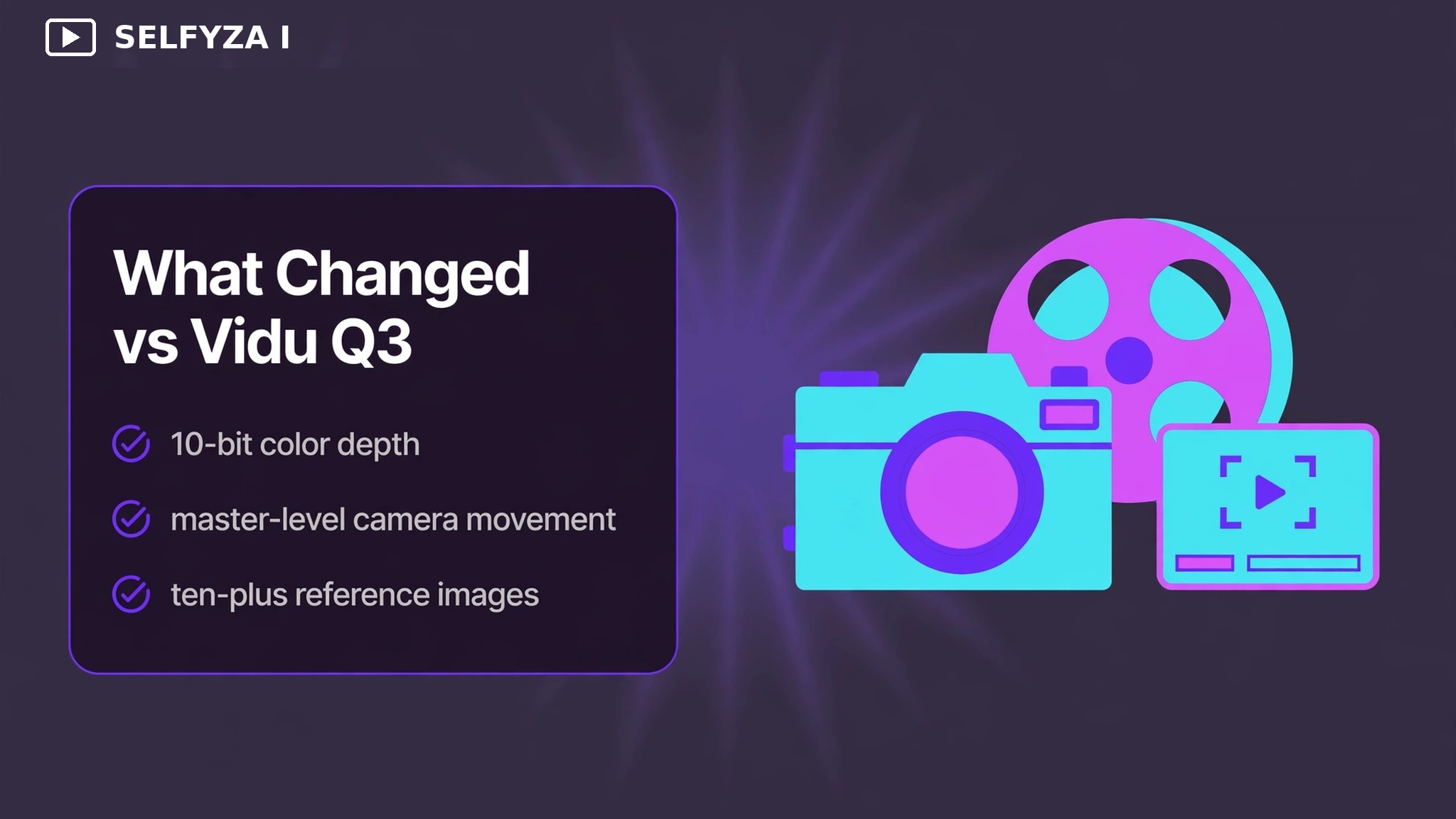
Our beta testing covered five upgrade areas. Each item below is what we observed hands-on during the beta (October 08, 2026) — not a vendor claim sheet.
4K Resolution and 10-Bit Color Depth
The most concrete change is resolution. Vidu Q4 adds 2K and 4K tiers to a ladder that runs 540p, 720p, 1080p, 2K and 4K. It also moves to 10-bit color depth, which Vidu describes as the industry's highest color depth for this class of model — and in our test generations, the extra headroom for grading was the visible difference.
What 10-bit actually changes in practice: smoother color transitions and more color information kept in shadow and highlight regions, which gives you a workable starting point for color grading. Vidu describes the result as reaching a cinematic standard of clarity — in our test generations, the step up in sharpness was visible, and the resolution list is specific enough to plan around.
Video generated by Vidu 4: Tested sample by SelfyzAI:
On SelfyzAI, output at this fidelity runs through the video HD tool — the 4K tier, once public, would be the part of Q4 that benefits most from that workflow.
Master-Level Camera Movement
The second headline is camera control, which the preview calls master-level camera movement. Vidu Q4 supports multiple camera move styles with smooth, stable motion, and the sequencing logic across cuts behaves more like real shooting — in our testing, multi-shot camera logic was smoother and more precise for longer video.
This is the change that matters most for people who storyboard. Camera moves are one of the places where AI video most often breaks the illusion: motion drifts, cuts jar, and the result reads as generated.
Video generated by Vidu 4: Tested sample by SelfyzAI:
More Reference Images and Audio References
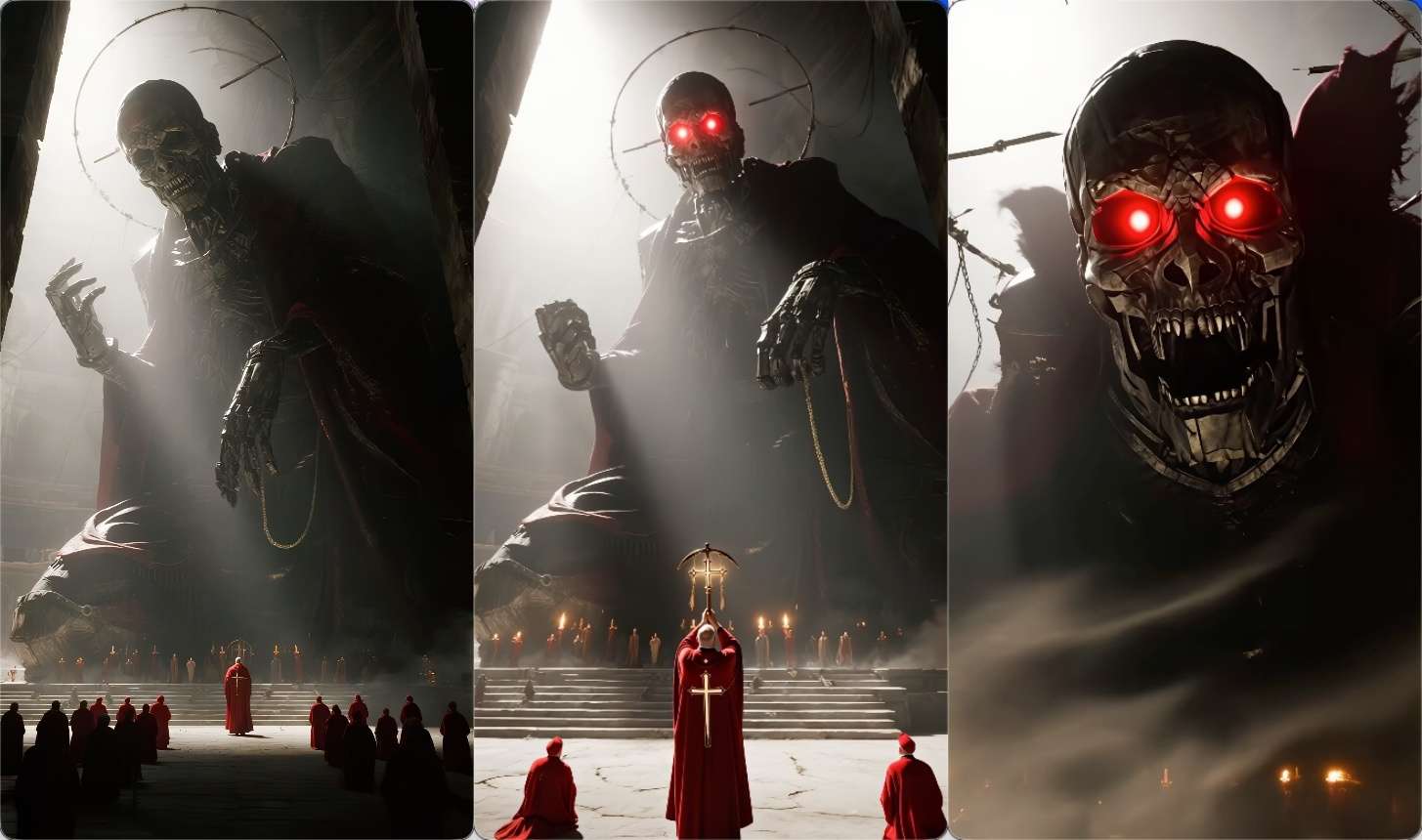
Vidu's reference capability has always been its signature feature, and Q4 pushes it further. Our testing confirmed room for ten-plus reference images in reference-to-video mode — a meaningful jump from the roughly seven references the current Q-series models are known for — plus support for 0–3 audio references per generation.
We deliberately quote no exact image cap — the final ceiling is confirmed at release. "Ten-plus" is the honest figure until then. For creators already working with reference-heavy setups, this is the number to watch: the gap between "a few references" and "ten-plus" is the gap between anchoring a character and anchoring a whole scene.
Reference-driven generation on SelfyzAI runs through the reference to video tool, which is where Q4 will naturally land when it joins the picker in the first wave.
Better Acting and Lip-Sync
Performance is where our testing showed the most deliberate progress. Characters show more layered emotion — micro-expressions, emotion that builds across a shot — with dialogue lip-sync accuracy specifically improved for multi-person scenes. Multi-camera, multi-cut character positioning is described as more stable, which matters for dialogue coverage where today's models often let characters drift between cuts.
This reads as Vidu targeting the short-drama audience directly. Dialogue scenes with several speakers are among the hardest things to generate convincingly, and lip-sync is where audiences notice failure first.
Video generated by Vidu 4: Tested sample by SelfyzAI:
Faster, More Stable Generation
Two findings round out the list. First, Vidu describes Q4's inference speed as the fastest in the industry — our beta runs turned around quickly, though we did not benchmark it against other models. Second, large-scale motion held up better in our tests: group movement held together, and big actions like turns, head shakes and chases did not break down.
Where Vidu Q4 Fits in a Real Workflow
Put the headline claims aside and look at what our beta testing confirmed on the spec side, because this is what determines where Q4 fits in your workflow.
Vidu Q4's two modes map to two common starting points. Single-image-to-video inherits the input image's aspect ratio — a still becomes a moving shot. Reference-to-video supports 16:9, 1:1, 9:16, 4:3 and 3:4, which covers landscape, square and the vertical ratios social platforms expect. The single-image path matches the image to video workflow.
Output is MP4, MOV or base64 at 24 FPS with H264 encoding. The meaningful constraint is duration: 3 to 16 seconds per clip, any integer value in that range. That makes Q4 a clip generator, not a long-form renderer — and it makes the camera-cut stability claim load-bearing rather than decorative, because short dramas and story content will be built as clip sequences.
Four Scenarios the Preview Highlights
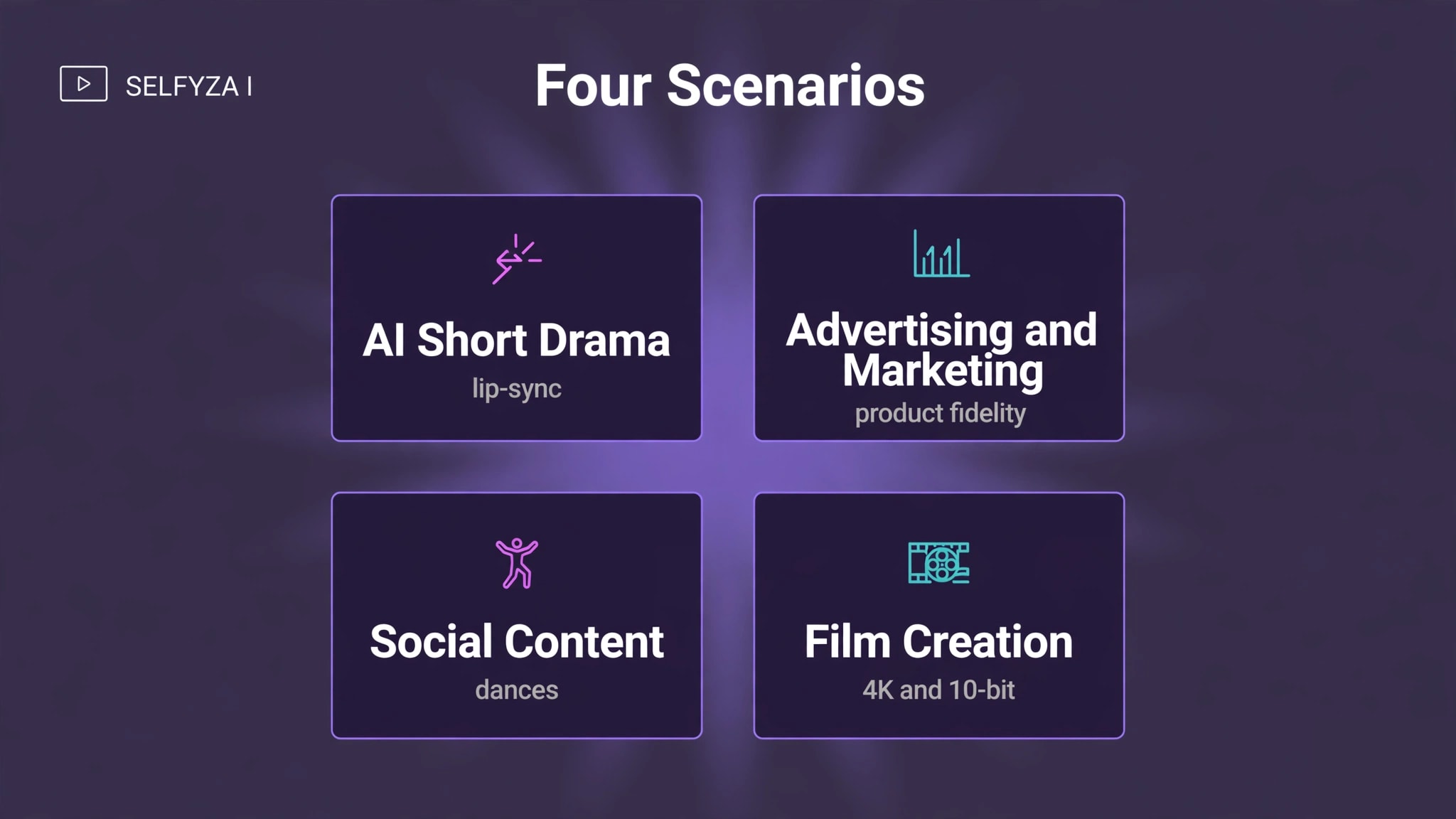
Our beta testing covered the four scenarios Vidu names for Q4. Here is what we observed for each, kept brief.
AI Short Drama
The drama case leans on the performance upgrades: improved dialogue accuracy in multi-person scenes, upgraded lip-sync, more stable character positioning across multiple camera setups, and the 10-bit cinematic look. Short drama is the scenario where every Q4 headline — acting, lip-sync, camera stability, color — has to work at once.
If you are building serial story content on SelfyzAI today, the MyStory Agent is the workflow designed for that shape of output: multi-shot sequences with consistent characters.
Advertising and Marketing
For ads, the preview highlights smoother camera moves (pushes, pulls, pans), stronger visual consistency for products and logos, clear text rendering without garbled characters with multilingual support, and second-level timeline control for precise timing. Product fidelity — "the product looks like the product" — is called out specifically, which is the make-or-break requirement for commercial work.
One standing note for anything ad-shaped: commercial use of generated content follows the platform's usage policy. The model gives you the pixels; the policy governs what you do with them.
Social Content
The social case covers dances, transformation effects, personal clips and MV-style content, with good character consistency from input images and support for multiple art styles — pixel art, clay, Y2K, game-CG, anime and live-action looks. Fast inference is positioned as the enabler here: social content lives on iteration speed.
Two things worth keeping in mind. First, if you publish AI-generated clips to social platforms, policies on AI-generated content differ by platform — check each platform's current guidelines before you post. Second, if your social workflow is music-driven, the MV Agent is the dedicated path for that: audio analysis through to a finished music video.
Film Creation
The film case bundles everything: 4K and 10-bit as the quality floor, better large-scale action for set pieces, stronger character consistency, more natural performances from plain-language direction, and light and skin texture that follows physical rules. Vidu's own language here is the most cinematic of the four — "film-level narrative capability" — and our test generations backed the ambition behind the phrasing.
Realistically, film creation is the scenario where our beta testing had the most to prove — and where wider testing will matter most once the model is public.
Real Limitations
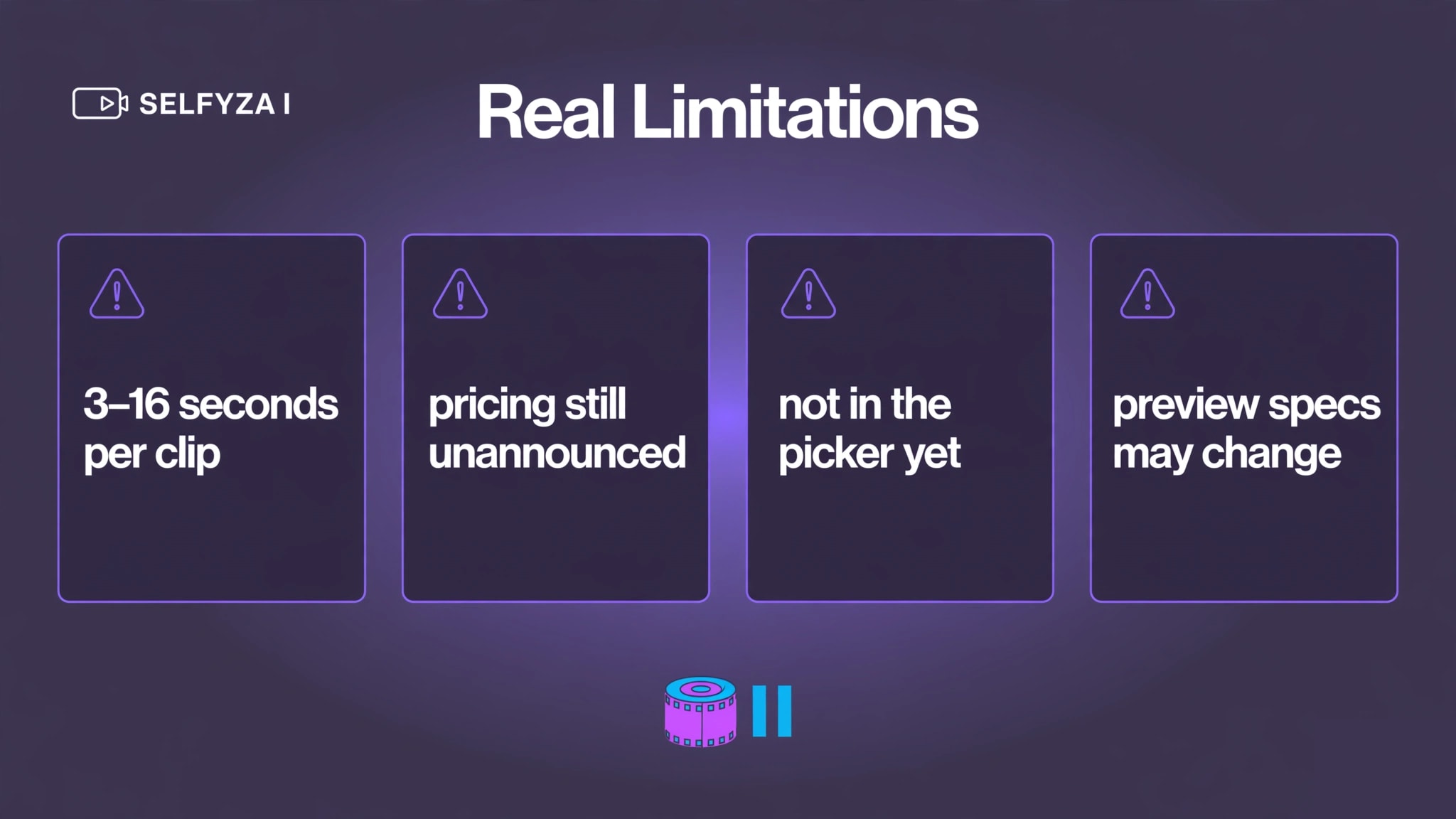
Four things to keep in view before planning around this model.
Each Clip Runs 3–16 Seconds
The parameter table caps output at 16 seconds per generation. That is a hard structural limit on the preview: anything longer than a single shot has to be built as a sequence, with all the continuity work that implies. The camera-stability and character-consistency improvements are Vidu's answer to that problem — they held up in our beta runs, but anything longer still needs the sequencing work.
If your projects routinely need longer continuous sequences, the practical move today is to extend video from a strong opening clip rather than waiting on a future model to remove the cap.
Pricing Is Still Unannounced
The preview materials list pricing as "stay tuned" — there is no number, no tier, no credit rate for Vidu Q4 anywhere in the vendor documents. That means the cost side of any Q4 workflow is currently unknowable.
What we can say is how cost works on our side: on SelfyzAI, credits are consumed per generation, and the amount varies by model, duration and resolution. A 4K-tier model at 16 seconds would plausibly sit at the expensive end of that range, but that is our inference, not a quoted price — check the pricing page before you budget around any new model. And the standing term worth knowing before any purchase: all purchases are non-refundable, per the official FAQ.
Not in the SelfyzAI Picker Yet
As of October 08, 2026, the SelfyzAI workspace picker offers Vidu Q3 Pro and Vidu Q2 Turbo — no Q4. Vidu Q4 will join the SelfyzAI model picker in the first wave once it officially launches. The exact timing is unconfirmed, so do not plan a production schedule around it.
This is the normal shape of a pre-release: the preview exists, the picker does not have it yet. If you need a Vidu model this week, Q3 Pro is the current top of that line on the platform.
Preview Specs May Change Before Public Release
Everything above comes from beta testing, and a beta describes a model that is still being built. Resolution tiers, reference caps, even the feature list can move before public release — pre-release numbers are provisional by nature.
Our position is simple. We will update this review from beta findings to release findings when the public specs land, and we will re-test the numbers that matter instead of treating preview numbers as settled.
How to Use It on SelfyzAI
Vidu Q4 is not available on SelfyzAI today, so this section is about what to expect rather than a walkthrough.
When Vidu Q4 goes live publicly, it will join the model picker in the AI video generator workspace in the first wave, alongside the current Vidu Q3 Pro and Q2 Turbo entries. The flow follows the standard shape we used in beta: choose the model in the picker, supply a single image or a set of references, set the duration within the 3–16 second range, and generate.
Until then, the useful preparation is not technical — it is editorial. If your next project would benefit from 4K delivery, multi-reference scene anchoring or dialogue-heavy short drama, build your test projects around those shapes now with the models available today. When Q4 lands in the picker, you will know within one generation whether it earns its place in your workflow.
Who It Fits — and Who Should Wait
This preview is worth following if you generate short dramas or dialogue-heavy content and lip-sync is your current pain point; if your ads work needs reliable product and logo fidelity at higher resolutions; or if you already build reference-heavy workflows and want to know how far the reference cap is moving.
Wait, and use what is available today, if you need a Vidu model this week — Vidu Q3 Pro is in the picker now; if you need firm pricing before you commit to a workflow — Q4's cost side is entirely unannounced; or if your projects need single clips longer than 16 seconds without extension work — the cap is structural, not a launch-day detail.
Frequently asked questions
What's new in Vidu Q4 compared with earlier Vidu models
Five areas, from our beta testing: 4K and 2K resolution tiers with 10-bit color depth; master-level camera movement with smoother multi-shot sequencing; ten-plus reference images plus 0–3 audio references; more layered acting with improved lip-sync in multi-person dialogue; and faster inference with more stable large-scale motion. All five held up in our test generations; final confirmation comes at public release.
Is there a public launch date for Vidu Q4?
No. No public release date has been announced, and the model is currently described only in internal-beta materials. Anything you read about a specific launch date is speculation.
What resolutions and formats does Vidu Q4 support?
Per the preview parameter table: 540p, 720p, 1080p, 2K and 4K resolution tiers; 24 FPS with H264 encoding; MP4, MOV or base64 output; 3 to 16 seconds per clip in whole-second steps. Aspect ratios depend on the mode — single-image inherits the input ratio, while reference-to-video supports 16:9, 1:1, 9:16, 4:3 and 3:4.
Will Vidu Q4 be available on SelfyzAI?
Yes — Vidu Q4 will join the SelfyzAI model picker in the first wave once it officially launches. It is not available today: as of October 08, 2026, the picker offers Vidu Q3 Pro and Vidu Q2 Turbo. The exact timing is unconfirmed.
Conclusion
Vidu Q4's preview describes a model built around three bets: 4K delivery, 10-bit color and camera movement that behaves like real shooting. Those are exactly the three dimensions where today's AI video most often breaks the illusion — resolution ceilings, flat color, drifting cameras. The two open items are equally clear: pricing is entirely unannounced, and every spec here comes from beta testing and awaits public confirmation.
Nothing in this preview argues for pausing current production. The current Vidu models in the picker are what your projects run on today, and Q4's 16-second cap means even the future version fits a clip-sequence workflow rather than replacing it.
If your brief is dialogue-heavy short drama, product-faithful advertising or reference-anchored social content in short clips, Vidu Q4 is the version to track — it will join the SelfyzAI picker in the first wave once it officially launches, and a single generation will tell you whether it earns its place in your workflow.
Vidu Q4 findings in this review come from SelfyzAI's hands-on beta testing as one of the model's first batch of beta testers, conducted October 08, 2026; beta specifications may change before public release. All statements about selfyz.ai — model availability, output specs, credit behaviour — were re-checked on selfyz.ai on October 08, 2026.