
About This Review
This review is written by the SelfyzAI team. Every specification and price below was checked against Google's official documentation on October 9, 2026. All statements about selfyz.ai were verified on selfyz.ai on October 9, 2026.
The short version: Nano Banana 2.1 genuinely resets Google's image API pricing — but "50% cheaper" only holds at 1K ($0.0336) and 2K ($0.0504), roughly half of Nano Banana 2's rates. The 4K price, widely misreported as $0.0756, is actually $0.113: about 25% cheaper, not half. If per-image cost decides your budget for high-volume generation or multi-reference editing, this version deserves attention. If you ship 4K, the saving is real but smaller than the headlines suggest — and input tokens got pricier, as the pricing section breaks down.
What Nano Banana 2.1 Is
Nano Banana 2.1 is Google's image generation and editing model, generally available since October 6, 2026. It is built on Gemini 3.6 Flash, carries the API model ID `gemini-nano-banana-2.1`, and is positioned by Google as the high-efficiency workhorse of its image lineup — the model meant for volume rather than for the most demanding single images. According to Google's documentation, it is rolling out across the Gemini app, Google AI Studio, the Gemini API, Google Search's AI Mode, Google Ads, Flow and Stitch.
In practical terms it does two jobs: text-to-image generation and conversational editing across several turns of instructions. It takes text and image inputs with up to 1 million tokens of context, and outputs at 1K, 2K and 4K (1K default). That combination is what the rest of this review measures against its predecessor.
What Changed vs Nano Banana 2
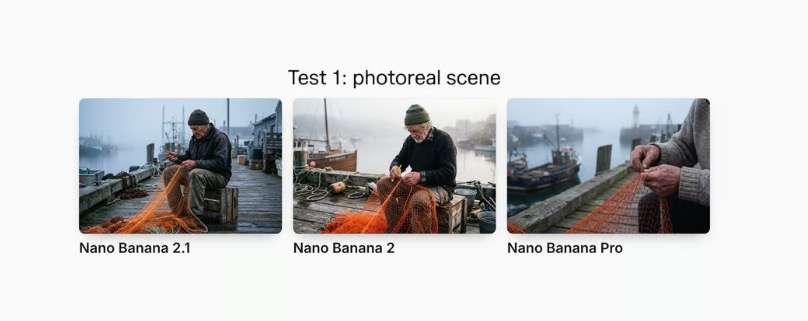
Nano Banana 2 (Gemini 3.1 Flash Image) is the previous generation, now marked deprecated in Google's changelog — so this comparison is a migration question as much as a feature list. Each change below follows Google's developer documentation as reported by independent outlets.
One framing note before the itemised changes, from our own side of the fence: the SelfyzAI product team's internal testing, conducted in October 2026, rates Nano Banana 2.1 as the strongest image model the team has evaluated to date. Three observations sit behind that assessment. First, text-image composition is visibly better — infographic-style layouts hold together where previous models broke the arrangement. Second, subject and character consistency across multi-turn edits is stronger, with less drift between turns. Third, prompt understanding is quicker and more literal: the model follows complex, multi-part instructions with less reinterpretation than its predecessors.
1K, 2K and 4K output with cleaner wide panoramas
The output change is less about new sizes than quality at the sizes that matter: 1K, 2K and 4K, with Google's documentation noting fixes for tiling artifacts on wide and panoramic ratios (1:4, 4:1, 1:8, 8:1) at 2K and 4K. Our product team's internal testing confirmed it independently — the tiling artifacts that affected Nano Banana Pro at those sizes no longer appear in 2.1. Around fifteen aspect ratios cover the standard social and display formats without custom cropping.
Image-output pricing cut from $60 to $30 per million tokens
Google cut the image-output rate on its standard paid tier from $60 to $30 per million image tokens — the change most coverage led with, and it is real. Per image, that is about $0.0336 at 1K and $0.0504 at 2K, roughly half of Nano Banana 2's $0.067 and $0.101. (The 4K figure, where the "half price" story breaks down, gets its own section below.) Batch API processing halves those figures again — material for anyone generating in the hundreds.
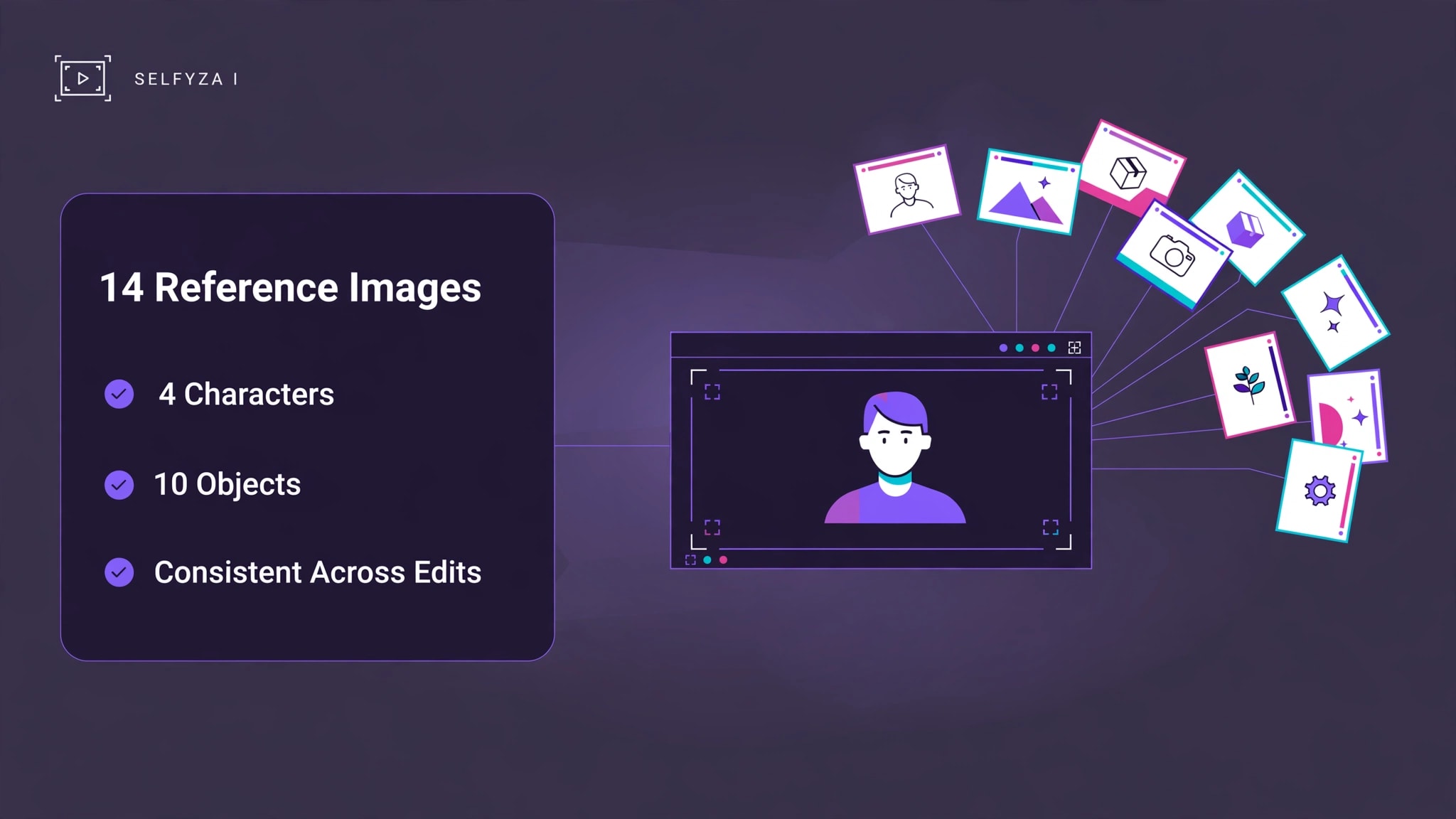
Up to 14 reference images: 4 characters and 10 objects
Multi-image fusion is the largest capability jump: up to 14 reference images per request, with up to 4 characters and 10 objects kept consistent across edits. Feed a character sheet plus object references, then edit across turns without the subject drifting. Character consistency across turns is one of the hardest problems in editing pipelines; Google's own evaluations claim a clear step up — treat that as the vendor's measurement, not an independent one.
Mask and ink-based editing with three thinking levels
For targeted edits, mask-based editing lets you paint the region to change and describe only that region, alongside ink-style sketch guidance. Three thinking levels (minimal, medium, high; medium is default) trade reasoning depth for latency and cost: minimal for quick drafts, medium as the balanced default, high for complex compositions where deeper reasoning justifies the extra time. Thinking output bills as text tokens, so "high" is not free — it lands on the input-plus-reasoning side of the bill.
Search grounding with Google Web and Image Search
Generations and edits can be grounded in Google Web Search and Image Search results — factual anchoring for landmarks, products or references the model would otherwise hallucinate. Google includes 5,000 grounding requests per month free (shared across Gemini 3.x models), then bills $14 per 1,000. Grounding reduces one class of errors; it does not make the model a source of truth, a boundary Google's own model card acknowledges.
Better text rendering, infographics and content credentials
Google's documentation claims improved text rendering and infographic layout accuracy — historically the tell-tale failure, where a near-perfect poster ships with one misspelled word. Generated images carry C2PA Content Credentials, the industry provenance marker, which travels with the file rather than living in a separate disclosure step.
Nano Banana 2.1 Pricing: 1K, 2K and 4K
All figures below are Google Gemini API standard-tier prices, as listed on Google's official pricing page (updated October 7, 2026).
| Output size | Standard price per image | Batch price per image |
|---|---|---|
| 1K | $0.0336 | $0.0168 |
| 2K | $0.0504 | $0.0252 |
| 4K | $0.113 | $0.0567 |
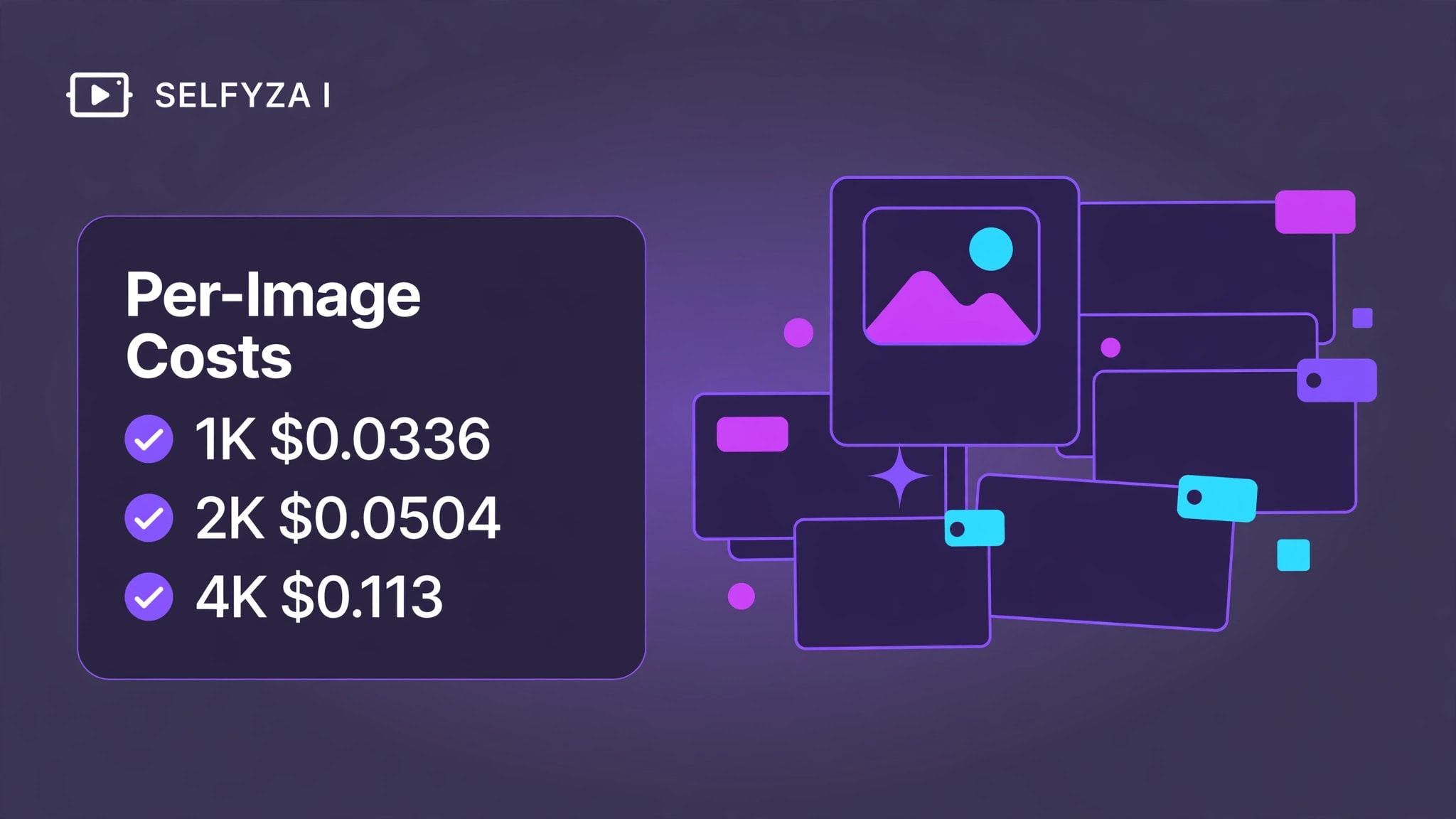
Behind those per-image numbers sit three token rates: $1.50 per million input tokens, $7.50 per million text and thinking output tokens, and $30 per million image output tokens. A 4K image consumes roughly 3,780 image tokens at the $30 rate, which is where the $0.113 comes from.
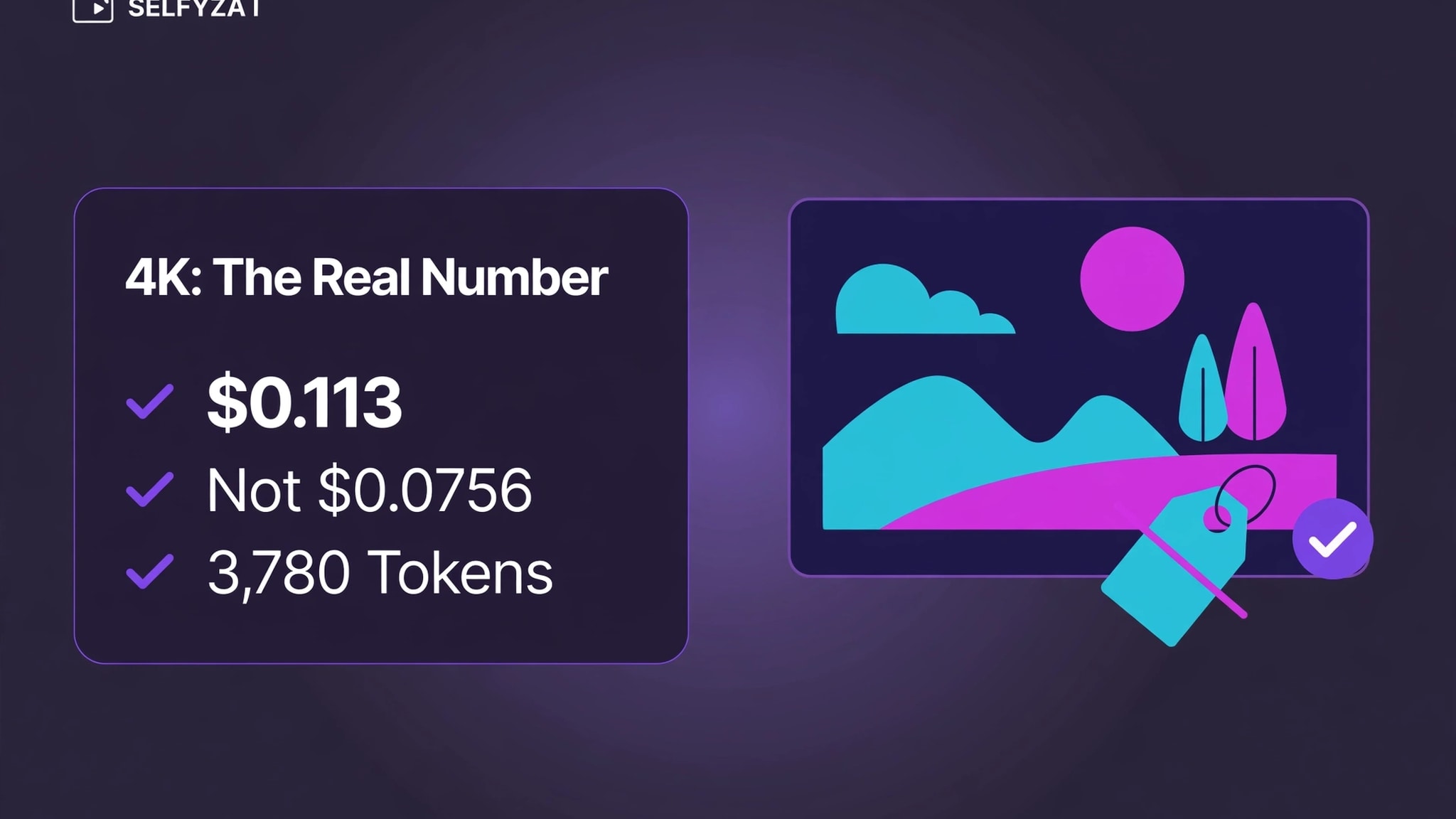
Now the correction: much launch-day coverage lists 4K at $0.0756, a figure that assumes 2,520 tokens per image. Google's pricing page bills 4K at 3,780 tokens — $0.113. Several outlets have corrected their tables, but $0.0756 still circulates; treat any source quoting it as working from launch estimates, not the current price page.
So the honest "50% cheaper" headline splits by resolution: about half at 1K ($0.0336 vs $0.067) and 2K ($0.0504 vs $0.101), but only about 25% at 4K ($0.113 vs $0.151) — a real saving, not the halving the headlines imply.
Against Nano Banana Pro, the top of Google's lineup, 2.1 costs one quarter per image at 1K ($0.0336 vs $0.134) — but the ratio narrows with resolution: about one in 2.7 at 2K and one in 2.1 at 4K ($0.113 vs $0.24). Quote "quarter of Pro" with the resolution attached, or it becomes the same misreading as $0.0756.
One more line belongs on the bill: input tokens rose from $0.50 to $1.50 per million. Workflows feeding many reference images — exactly the 14-reference editing this model advertises — consume input tokens on every image, so a heavy multi-reference pipeline can cost more overall even as output got cheaper. Budget both sides, not just the output column.
All prices above are as of October 2026.
Where It Fits in a Real Workflow
The capabilities above map cleanly onto two production workflows — scenario fits drawn from documented behaviour, not hands-on tests. We have not run Nano Banana 2.1 ourselves; what follows is where its feature set lands, not measured results.
E-commerce product variants
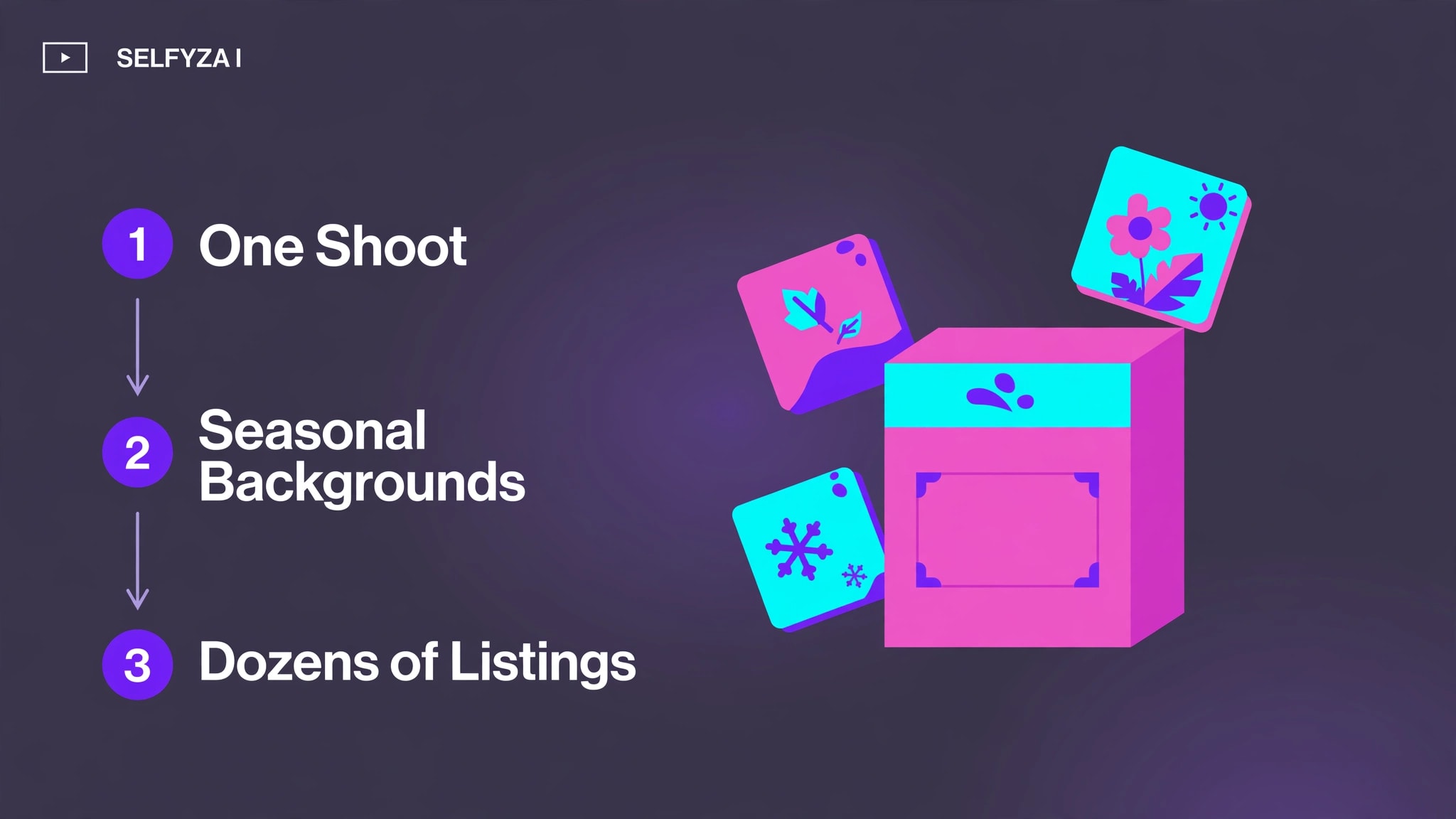
A single product photograph plus background and style references is the textbook case for multi-image fusion: one shoot becomes dozens of listing images across seasonal backgrounds with the product visually stable. The 4-character/10-object budget is generous here — product, model and props fit comfortably. Where the workflow continues into motion, these stills feed directly into image to video, turning a variant set into short clips without a second shoot. As with any AI-generated commercial imagery, commercial use remains subject to the platform's usage policy.
Comic panels and storyboards
Sequential art lives or dies on character consistency across panels — precisely what the 14-reference budget targets: a character sheet and setting reference go in, panel after panel comes out with the same cast. Mask editing fits the storyboarding revision loop: change panel three's background without redrawing its characters. Creators taking panels further can develop story-led video in SelfyzAI's MyStory Agent or push finished panels toward a consistent stylised look with AI effects. Expect iteration: consistency tooling narrows drift, it does not remove the need to check each panel.
Real Limitations
1. The 4K discount is about 25%, not 50%
Worth restating: "half price" holds for 1K and 2K, but 4K moves from $0.151 to $0.113 — roughly a quarter off. Budget the real number. And the input-token rise from $0.50 to $1.50 per million quietly taxes the model's best workflow: reference-heavy editing. Cost both columns of the price table, not just the output one.
2. Google's own model card lists real boundaries
The vendor's documentation is candid about what did not get fixed: small text still renders poorly; characters are not always consistent between input and output; spatial positions get confused; 3D reasoning and world knowledge remain limited (knowledge cutoff March 2026). Search grounding helps factual anchoring but does not remove hallucinations — a grounded model can still render the wrong building confidently. Text-heavy deliverables and spatially precise compositions still need human review before they ship.
How to Use the Nano Banana Family on SelfyzAI
To be explicit: as of October 9, 2026, Nano Banana 2.1 is selectable in the SelfyzAI AI image generator workspace — alongside Nano Banana 2 and Nano Banana Pro, GPT Image 2, the Seedream 5.0 variants and SelfyzAI's own model. You are welcome to try it there. Google's latest API pricing runs through Google's own channels; inside selfyz.ai, generation bills in credits, which vary by model, duration and resolution.
The handoff worth knowing is inside the platform: stills from the image workspace feed directly into the AI video generator, so consistent images — product variants, storyboard panels — become motion without leaving selfyz.ai. That pipeline is where a family with strong character consistency earns its keep.
Who It Fits — and Who Should Wait
Look closely at 2.1 if your image budget is decided per thousand generations — the 1K/2K halving moves pipelines from "too expensive at volume" to routine; if your editing already feeds many reference images; or if you are migrating off Nano Banana 2 and want the version Google is investing in.
Wait or look elsewhere if your deliverable is 4K-first and you budgeted the misreported $0.0756 — re-run the numbers at $0.113; if your work is text-heavy, since small-text rendering remains a listed limitation.
Frequently asked questions
What is Nano Banana 2.1?
Google's image generation and editing model, generally available since October 6, 2026. Built on Gemini 3.6 Flash (API ID `gemini-nano-banana-2.1`), it generates and edits at 1K, 2K and 4K, supports up to 14 reference images with character and object consistency, and runs across the Gemini app, AI Studio, the Gemini API, Search AI Mode, Google Ads, Flow and Stitch.
How much does Nano Banana 2.1 cost per image?
As of October 2026, on Google's standard API tier: about $0.0336 (1K), $0.0504 (2K) and $0.113 (4K) per image, with Batch halving each figure. These are Google API prices; SelfyzAI uses its own credit system, so they do not convert directly.
Why do some sites list the 4K price at $0.0756?
Launch-day coverage assumed 2,520 image tokens per 4K image. Google's pricing page (updated October 7, 2026) bills 3,780 tokens — $0.113. Outlets working from the current page list $0.113.
Is Nano Banana 2.1 better than GPT Image 2.5?
No clean verdict yet. GPT Image 2.5 (OpenAI, September 2026; Flare and Sunburst variants) and Nano Banana 2.1 overlap but serve distinct briefs: Google's model leads on per-image API price at volume, while early third-party leaderboard snapshots suggest GPT Image 2.5's precision variant holds an edge on exact text rendering. Treat both as preliminary data points — the comparison data is still thin.
Can I use Nano Banana 2.1 on SelfyzAI?
Yes. Since October 9, 2026, the Nanobana 2.1 has been available in SelfyzAI image to video workspace already.
Conclusion
Nano Banana 2.1 is the rare update where the pricing story matters more than the pixel story. Halving 1K and 2K image costs is genuine and large enough to change what "generate at volume" means for API pipelines; the editing upgrades — 14 reference images, character consistency, mask editing, search grounding — give that cheaper generation somewhere useful to go. The caveats are equally concrete: 4K is $0.113, not $0.0756; input tokens got pricier; Google's model card still lists small text and spatial reasoning as limitations; and 2.1 has been in the SelfyzAI picker as of this writing.
If your work is high-volume generation or reference-heavy editing through Google's API, this is a straightforward upgrade to evaluate — with the real 4K number in your spreadsheet, not the rumoured one. If your brief is 4K-first deliverables, exact typography, or running the model inside SelfyzAI today, the case is thinner. Either way: price the workflow you actually run, at the resolution you actually ship, against the current price page — not the launch-day headlines.
Specifications and prices in this review follow Google's official documentation for Nano Banana 2.1 as quoted by independent outlets (pricing page updated October 7, 2026); figures are as of October 2026. All statements about selfyz.ai — model availability and credit behaviour — were verified on selfyz.ai on October 9, 2026.